Arc, Angle, and Backspin: The Classical Mechanics Behind the NBA's Most Reliable Shot

Arc, Angle, and Backspin: The Classical Mechanics Behind the NBA's Most Reliable Shot
When Steph Curry steps to the free-throw line, the arena holds its breath. What most spectators do not realize is that the 15 feet separating the shooter from the basket is, in the language of physics, a precisely constrained projectile problem — one governed by the same equations that appear in every introductory mechanics course. The free throw offers an unusually clean laboratory for exploring Newtonian kinematics, and the data that professional basketball generates provides a remarkable empirical dataset against which theory can be tested.
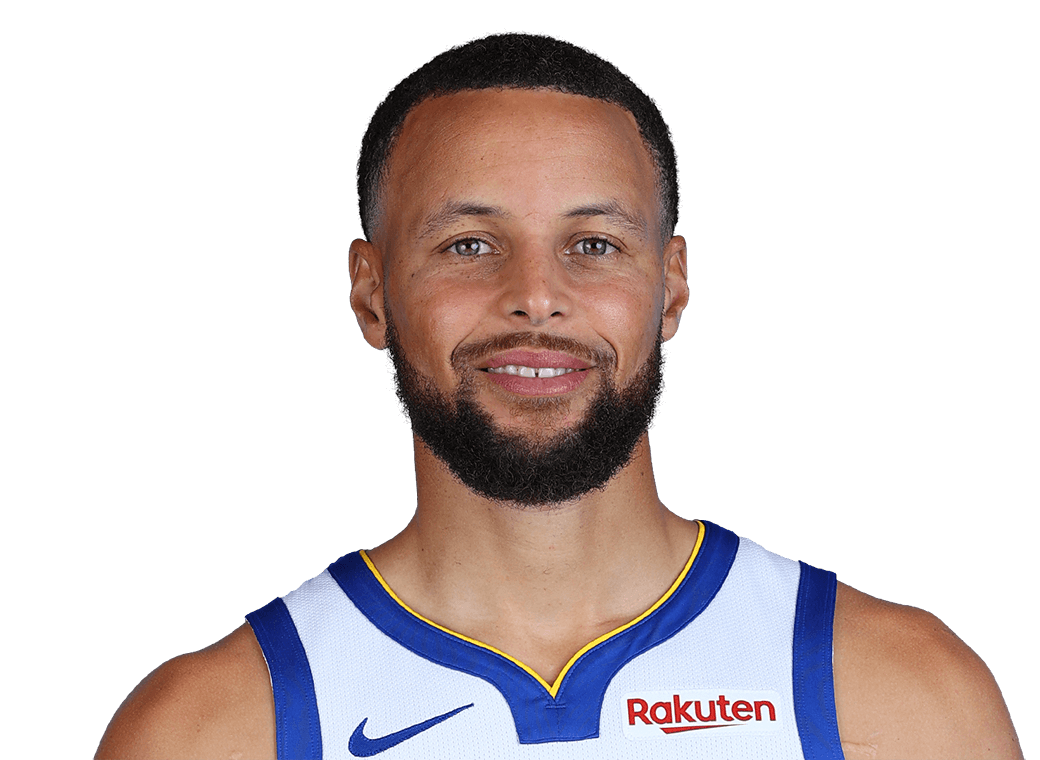 Photo: Steph Curry, via cdn.nba.com
Setting Up the Projectile Problem
Classical projectile motion assumes that a launched object travels under the influence of gravity alone, following a parabolic trajectory. The governing equations are familiar to any student who has completed a unit on two-dimensional kinematics:
- Horizontal displacement: x = v₀ cos(θ) · t
- Vertical displacement: y = v₀ sin(θ) · t − ½gt²
For a regulation NBA free throw, the boundary conditions are fixed by the rules of the game. The shooter releases the ball from approximately 8 to 8.5 feet above the floor — accounting for the height of a typical player's release point — and must direct it into a rim whose center sits exactly 10 feet high and 15 feet away horizontally. The rim itself has an interior diameter of 18 inches, while a standard basketball measures roughly 9.4 inches in diameter. That leaves a margin of just over 4 inches on either side of the ball — a tolerance that makes the geometry of entry angle critically important.
The Optimal Launch Angle: Not 45 Degrees
A common misconception among students encountering projectile motion for the first time is that 45 degrees always represents the optimal launch angle for maximum range. In an open-field scenario with a ground-level target, that holds true. However, the free-throw problem involves a elevated target, a constrained horizontal distance, and — crucially — a circular opening that the ball must enter from above. These constraints shift the optimal angle considerably.
Research published by physicists Peter Brancazio and, more recently, by Silverberg, Tran, and Adcock at North Carolina State University demonstrates that the mechanically ideal release angle for a free throw falls between approximately 51 and 55 degrees above the horizontal. At these angles, the ball arrives at the rim on a steeper downward trajectory, effectively increasing the apparent size of the opening. Consider the geometry: a ball arriving at 45 degrees sees an elliptical cross-section of the rim that is narrower than the one presented to a ball descending at 55 degrees. Steeper entry translates directly to greater scoring probability.
 Photo: North Carolina State University, via static.vecteezy.com
This is not merely theoretical. NBA players who consistently shoot above league average from the line — historically hovering around 77 percent — tend to release at angles closer to this optimal range. High-speed camera analysis of elite free-throw shooters confirms release angles clustering between 50 and 56 degrees, a finding that aligns tightly with the mechanical prediction.
Why Arc Height Matters
Related to launch angle is the concept of arc height — the maximum elevation the ball reaches during its flight. A higher arc, all else being equal, corresponds to a steeper descent angle at the rim. Physics tells us that the peak height h of the trajectory is:
h = (v₀ sin θ)² / (2g)
For a release velocity of approximately 24 feet per second (a typical value derived from motion-capture studies), an angle of 52 degrees yields a peak height of roughly 15 feet — about 5 feet above the rim. Players and coaches often describe this as "getting enough arc on the ball," and the mechanical reasoning is sound: shallow trajectories not only reduce the effective target area but also increase sensitivity to small velocity errors. A ball released with slightly too much or too little force on a low arc will miss cleanly; the same error on a higher arc may still clip the rim and, with the assistance of backspin, fall through.
The Aerodynamics of Backspin
Perhaps the most elegant physical element of the ideal free throw is the role of backspin. When a shooter imparts backspin — rotation in the direction opposite to the ball's forward travel — two distinct mechanical effects come into play.
First, the Magnus effect produces a slight downward aerodynamic force on a backspin shot, which modestly increases the steepness of descent. While this effect is relatively small at free-throw velocities, it is non-negligible over the full 15-foot flight.
Second, and more practically significant, is the behavior of a spinning ball upon contact with the rim. When a ball carrying backspin strikes the front of the rim, the spin direction acts to redirect the ball backward and downward — toward the basket — rather than bouncing it forward and away. This is a direct consequence of the friction between the ball's surface and the metal rim, combined with the angular momentum stored in the spin. Studies suggest that backspin of approximately three revolutions per second represents the practical optimum: sufficient to produce favorable rim interaction without introducing instability in the flight path.
This is why coaches at every level instruct players to "follow through" with their wrist, snapping it forward at the point of release. That wrist snap is the mechanical mechanism by which backspin is generated, and it is a learned motor skill with a quantifiable physical payoff.
From the Textbook to the Free-Throw Line
For students working through projectile motion in a high school AP Physics course or a college introductory mechanics sequence, the free throw offers something that textbook cannon-ball problems cannot: immediate cultural resonance and accessible real-world data. The NBA publishes shooting statistics for every player, and organizations like Second Spectrum and SportVU provide detailed tracking data that includes release angle, release height, and shot arc — all directly measurable quantities in the kinematic equations students are already studying.
Assigning students to calculate the minimum and maximum release velocities that would result in a successful free throw at a given angle, or to determine the entry angle for a shot with a specific arc height, transforms abstract algebra into a problem with a verifiable answer. The physics does not change because the ball is orange and the audience is cheering.
The free throw line, it turns out, is one of the most accessible entry points into applied classical mechanics available in American popular culture. Every bounce off the rim, every swish, every missed shot that clangs out — each is a data point in an ongoing, unwitting experiment in Newtonian physics, conducted 75 times per game, 82 games per season, by athletes who have optimized their technique through repetition rather than calculation. The remarkable finding is that their instincts and the equations agree.