The Equations That Break: Navier-Stokes, Turbulence, and Physics' Most Expensive Unsolved Mystery
The Equations That Break: Navier-Stokes, Turbulence, and Physics' Most Expensive Unsolved Mystery
On any given day, roughly 45,000 commercial flights cross American airspace. Each aircraft burns more fuel than its designers would prefer — not because of poor engineering, but because of physics that remains, in a rigorous mathematical sense, unresolved. Turbulence, the chaotic churning of fluid flow that rattles passengers and strains airframes, is not merely an inconvenience. It is a window into one of the last genuinely open questions in classical physics, and the gap between what engineers can measure and what mathematicians can prove carries consequences measured in billions of dollars and, in some contexts, human lives.
Laminar Order and Its Collapse
To appreciate why turbulence is so resistant to description, it helps to understand the orderly alternative. In laminar flow, fluid moves in smooth, parallel layers that slide past one another with minimal lateral mixing. The velocity profile is predictable; the mathematics is tractable. A slow-moving river near its banks, blood moving through a capillary, or air gliding over an aircraft wing at low speed — all exhibit this cooperative, well-organized behavior.
The transition from laminar to turbulent flow is governed by a dimensionless quantity called the Reynolds number, introduced by the British engineer Osborne Reynolds in 1883. It is defined as the ratio of inertial forces to viscous forces within a fluid:
Re = (ρ · v · L) / μ
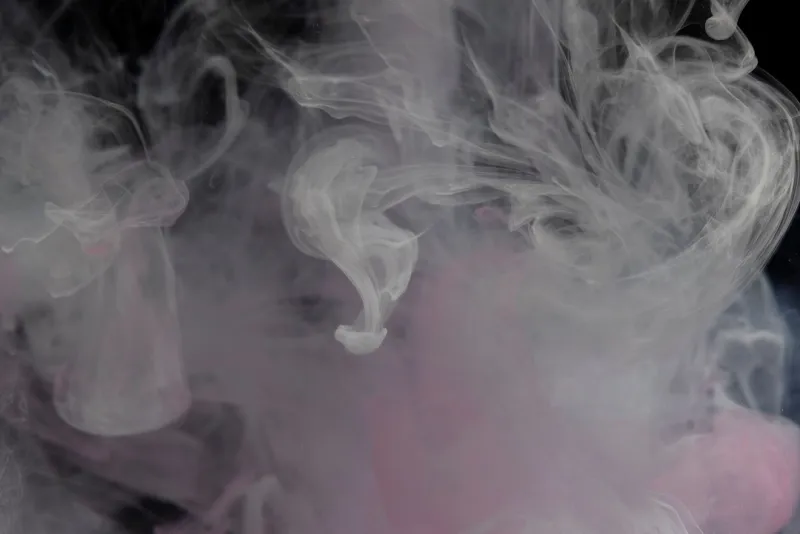
where ρ is fluid density, v is flow velocity, L is a characteristic length scale (such as pipe diameter or wing chord length), and μ is dynamic viscosity. At low Reynolds numbers, viscous damping suppresses perturbations and flow remains laminar. As the Reynolds number climbs past characteristic thresholds — roughly 2,300 for pipe flow, with the precise value depending on geometry and initial conditions — small disturbances are amplified rather than damped. The flow destabilizes. Eddies form, cascade into smaller eddies, and the system enters a state of sustained, three-dimensional chaos.
The atmosphere through which a commercial airliner cruises at 35,000 feet involves Reynolds numbers in the tens of millions. Full turbulence is not the exception in that environment; it is essentially the default condition.
The Navier-Stokes Equations and Their Uncomfortable Silence
The mathematical framework meant to describe all of this is embodied in the Navier-Stokes equations, derived independently by Claude-Louis Navier and George Gabriel Stokes in the nineteenth century. These partial differential equations express conservation of momentum for a viscous fluid, accounting for pressure gradients, viscous stresses, and external body forces. In principle, they describe everything from the wake behind a bicycle wheel to the convective dynamics inside a star.
The problem is that "in principle" is doing enormous work in that sentence.
For laminar, low-Reynolds-number flows, Navier-Stokes solutions are well-behaved and computable. For turbulent flows, the equations become brutally nonlinear. Small changes in initial conditions produce wildly divergent outcomes — a hallmark of deterministic chaos. Numerical methods, particularly Direct Numerical Simulation (DNS), can solve the equations computationally for modest Reynolds numbers, but the required resolution scales roughly as Re^(9/4), meaning that simulating the full turbulent boundary layer of a commercial aircraft wing at cruise conditions would demand computational resources that do not yet exist and may not exist for decades.
More fundamentally, mathematicians have not been able to prove that smooth, physically reasonable solutions to the three-dimensional Navier-Stokes equations always exist. It is conceivable — though unproven — that the equations can produce solutions that blow up to infinite velocity in finite time, a mathematical pathology that would suggest the equations are incomplete as a physical description. This is precisely the question posed by the Clay Mathematics Institute's Millennium Prize: prove that smooth solutions always exist and remain bounded, or find a counterexample demonstrating breakdown. The $1 million reward has gone unclaimed since the prize was established in 2000.
The Kolmogorov Cascade and the Texture of Chaos
Despite the absence of a complete analytical theory, physicists have developed powerful statistical frameworks for understanding turbulence. The most influential originates with the Soviet mathematician Andrei Kolmogorov, whose 1941 theory proposed that in fully developed turbulence, energy injected at large scales cascades through a hierarchy of progressively smaller eddies until it is dissipated as heat at the smallest scales — now called the Kolmogorov microscale.
This energy cascade follows a remarkably universal scaling law. The power spectrum of velocity fluctuations in the inertial subrange scales as the wavenumber to the power of -5/3, a result confirmed across an extraordinary range of physical systems. The atmosphere, ocean currents, laboratory wind tunnels, and even solar wind turbulence all exhibit this signature. The universality is striking and theoretically suggestive, but it describes statistical behavior rather than providing the deterministic, closed-form solutions that a complete theory would require.
Engineers rely on this statistical understanding through turbulence models — Reynolds-Averaged Navier-Stokes (RANS) approaches, Large Eddy Simulation (LES), and hybrid methods — that approximate the effects of turbulent fluctuations without resolving them directly. These models are indispensable tools, but they are calibrated approximations, not derivations from first principles. Each carries assumptions and limitations that engineers must navigate carefully depending on the application.
Stakes Across Disciplines
The practical consequences of this theoretical gap extend well beyond aerospace. In the United States alone, turbulent friction in natural gas pipelines accounts for a measurable fraction of the energy consumed in transmission, representing hundreds of millions of dollars in annual losses that more complete flow control strategies might reduce. Industrial mixing processes — in chemical manufacturing, food production, and pharmaceutical synthesis — depend on turbulence to homogenize materials, yet the chaotic nature of the mixing makes precise control elusive.
In medicine, the cardiovascular system operates in a regime where turbulence has direct clinical significance. Blood flow through healthy large arteries is mostly laminar, but stenotic vessels, prosthetic heart valves, and arterial bifurcations can generate turbulent conditions that increase shear stress on vessel walls, promote platelet activation, and contribute to thrombosis. Computational fluid dynamics models of the coronary circulation are now used in surgical planning, but their accuracy is bounded by the same turbulence modeling limitations that constrain aerospace simulations.
Atmospheric science faces the problem at planetary scale. Weather prediction models must parameterize sub-grid turbulent processes that they cannot resolve directly, and the sensitivity of turbulent systems to initial conditions imposes a hard theoretical ceiling on deterministic forecast skill — a limit estimated at roughly two weeks for synoptic-scale weather patterns, regardless of how much computing power is applied.
Why the Problem Endures
Turbulence persists as an open problem not because physicists have neglected it — Richard Feynman famously called it "the most important unsolved problem of classical physics" — but because it sits at the intersection of several deep mathematical difficulties simultaneously. It is nonlinear, three-dimensional, dissipative, and sensitive to initial conditions. No small-parameter expansion tames it cleanly. No symmetry reduces it to a lower-dimensional problem in the general case.
Progress continues on multiple fronts. Experimental techniques using particle image velocimetry and high-speed imaging resolve flow structures at unprecedented detail. Machine learning approaches are beginning to augment traditional turbulence models, identifying patterns in simulation data that elude analytical description. And the mathematical study of partial differential equations is gradually advancing the tools available for attacking existence and regularity questions.
But a complete, rigorous, predictive theory of turbulence — one that derives macroscopic statistical behavior from the Navier-Stokes equations without empirical closure assumptions — remains out of reach. For a phenomenon that shapes aircraft design, energy policy, surgical outcomes, and the fundamental limits of weather forecasting, that gap is not merely an academic curiosity. It is an active constraint on human capability, and closing it would represent one of the most consequential achievements in the history of physics.