Beyond the Barrier: Shock Wave Physics, Rankine-Hugoniot Conditions, and the Enduring Misconceptions of Supersonic Flight
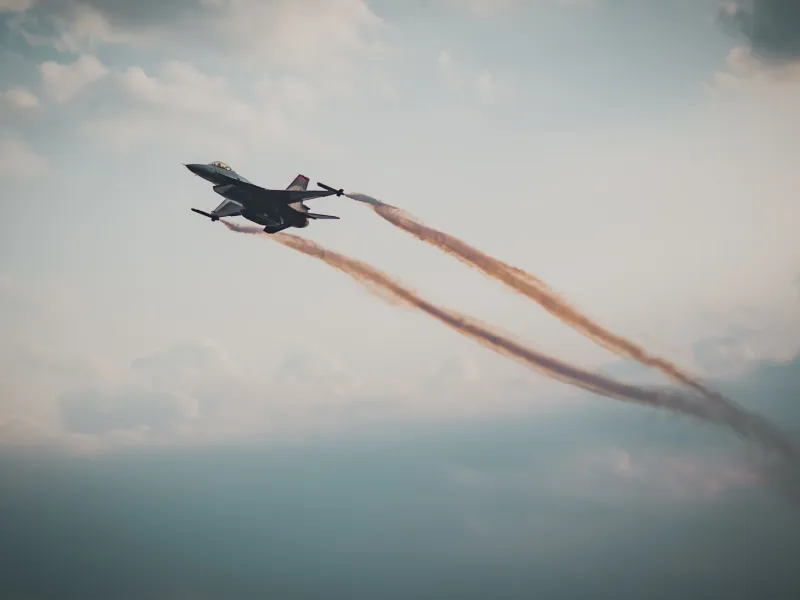
On October 14, 1947, Captain Charles "Chuck" Yeager climbed into the Bell X-1 over the Mojave Desert and accelerated past Mach 1—a moment that entered American cultural memory as the "breaking" of the sound barrier. The metaphor was irresistible: a wall of resistance, built from sound itself, shattered by courage and engineering. It was also, in the precise physical sense, wrong. There is no barrier. There is no wall. There is, instead, a continuous and mathematically tractable transformation of fluid behavior that begins well below Mach 1 and continues to evolve through hypersonic regimes that researchers are still working to fully characterize. The persistence of the barrier metaphor is not merely a semantic inconvenience—it actively impedes intuition about the genuine physics governing every supersonic vehicle, from fighter aircraft to intercontinental ballistic missiles to the next generation of commercial high-speed transport.
The Mach Number and What It Actually Represents
The Mach number is the ratio of a flow velocity to the local speed of sound in the medium through which it travels. At sea level and 59°F, the speed of sound in air is approximately 761 miles per hour. But the speed of sound is not a fixed universal constant—it varies with temperature as:
a = √(γRT)
where γ is the ratio of specific heats (approximately 1.4 for air), R is the specific gas constant, and T is absolute temperature. At the cruise altitude of a commercial aircraft, where temperatures approach -70°F, the speed of sound drops to roughly 660 mph. For a hypersonic vehicle reentering the atmosphere, local temperatures in the shock layer can exceed 10,000°F, dramatically altering the local speed of sound and complicating Mach number calculations.
This temperature dependence is the first indication that supersonic aerodynamics is not a problem of crossing a threshold but of navigating a continuously varying physical landscape. The relevant question is never simply "is the vehicle faster than sound?" but rather "what is the local Mach number at every point on the vehicle's surface, and what flow regime does each region inhabit?"
Transonic Complexity and the Region the Barrier Metaphor Ignores
The most aerodynamically challenging regime for most aircraft is not supersonic flight—it is transonic flight, roughly Mach 0.8 to Mach 1.2. In this regime, different regions of the airflow around a vehicle simultaneously occupy subsonic and supersonic conditions. The curved upper surface of a wing accelerates airflow to local velocities that may exceed Mach 1 even when the aircraft itself is traveling at Mach 0.85. Where that locally supersonic flow decelerates back to subsonic conditions, it does so through a shock wave—an abrupt discontinuity in pressure, density, temperature, and velocity.
These transonic shock waves generate wave drag, a form of aerodynamic resistance with no analog in subsonic flight. They can also induce flow separation, leading to control surface buffeting and, in early aircraft designs, loss of control authority. The dangerous handling characteristics that test pilots encountered approaching Mach 1 in the 1940s were not evidence of a barrier—they were evidence of poorly understood transonic shock wave behavior interacting with aircraft geometries designed for subsonic regimes. The X-1's straight, thin wings and the careful aerodynamic refinements incorporated into its design were solutions to a fluid dynamics problem, not a demonstration that a wall had been breached.
The Rankine-Hugoniot Conditions
When a shock wave forms, the flow properties on either side of the discontinuity are related by the Rankine-Hugoniot conditions—a set of conservation equations derived from the requirements that mass, momentum, and energy must be conserved across the shock front. For a normal shock (one perpendicular to the flow direction), these relations yield:
- Density ratio: ρ₂/ρ₁ = (γ+1)M₁² / [(γ-1)M₁² + 2]
- Pressure ratio: P₂/P₁ = [2γM₁² - (γ-1)] / (γ+1)
- Temperature ratio: T₂/T₁ = P₂/P₁ × ρ₁/ρ₂
where subscripts 1 and 2 denote conditions upstream and downstream of the shock, and M₁ is the upstream Mach number. These equations, derived independently by William Rankine and Pierre Henri Hugoniot in the nineteenth century—decades before powered flight—describe a continuous mathematical relationship between shock strength and flow conditions. There is no discontinuity in the equations at Mach 1. The physics transitions smoothly; only the character of the solutions changes.
A critical result of the Rankine-Hugoniot analysis is that shock waves are inherently irreversible processes. Entropy increases across every shock, and this entropy production represents a permanent energy loss. Unlike wave drag in subsonic flow, which in principle can be minimized through careful shaping, the entropy increase associated with shock formation is thermodynamically mandatory. This is why supersonic and hypersonic vehicles face fundamental efficiency constraints that have no subsonic analog—not a barrier, but a thermodynamic penalty that scales with shock strength.
Oblique Shocks and the Engineering of Supersonic Inlets
Normal shocks, which produce the largest entropy increase for a given Mach number, are avoided wherever possible in supersonic vehicle design. The preferred alternative is a series of oblique shocks—shock waves oriented at an angle to the incoming flow—which accomplish the same task of decelerating flow to subsonic conditions through multiple weaker discontinuities, each generating less entropy than a single strong normal shock.
This principle underlies the design of supersonic engine inlets, including the variable geometry inlets on the SR-71 Blackbird and the fixed-geometry inlets on the F/A-18 Super Hornet. By carefully shaping the inlet geometry, engineers arrange a sequence of oblique shocks that compress incoming air with near-minimum entropy production before it enters the engine. The spike inlet of the SR-71 was designed to position the final normal shock precisely at the inlet throat across a range of flight conditions—an achievement requiring precise application of oblique shock theory and the Rankine-Hugoniot relations.
Hypersonic Regimes and the Limits of Classical Theory
Above Mach 5, the hypersonic regime introduces physical phenomena that the classical compressible flow framework does not fully capture. At these speeds, aerodynamic heating becomes severe enough to dissociate diatomic nitrogen and oxygen molecules, altering the effective value of γ and invalidating the standard Rankine-Hugoniot formulation. Ionization of the gas surrounding the vehicle creates a plasma layer that attenuates radio communications—the reentry blackout experienced by early NASA spacecraft—and introduces electromagnetic effects absent from purely aerodynamic analysis.
These complications are directly relevant to contemporary US defense and civilian research programs. The development of hypersonic glide vehicles and air-breathing scramjet propulsion systems requires solving flow problems in regimes where molecular dissociation, real-gas effects, and boundary layer transition interact in ways that current computational fluid dynamics tools handle imperfectly. Experimental facilities capable of sustained hypersonic testing at Mach 10 and above remain scarce and expensive, which is why the physics of hypersonic flow is among the most actively studied areas in modern aerodynamics.
Reclaiming Physical Intuition
The sound barrier metaphor accomplished something valuable in 1947: it made an abstract aerodynamic achievement legible to a public with no background in compressible flow theory. But the cost of that simplification compounds over time. Students who internalize the barrier as a physical reality struggle to understand why transonic aircraft require swept wings, why supersonic inlets are shaped the way they are, or why hypersonic vehicles face qualitatively different challenges than those flying at Mach 2.
The actual physics—continuous, mathematically precise, governed by conservation laws that Rankine and Hugoniot wrote down before the Wright Brothers flew—offers a more demanding but ultimately more satisfying account. Shock waves are not obstacles. They are the atmosphere's solution to the problem of accommodating a disturbance faster than information can propagate. Understanding them on those terms is the beginning of understanding supersonic flight at all.