Frozen in Flight: The Physics of High-Speed Imaging and the Hidden Mechanics of the Everyday World
The human visual system processes roughly 10 to 12 distinct frames per second under optimal conditions—a rate sufficient for navigating an environment in which most consequential events unfold over seconds or minutes. Yet the physical universe operates on timescales that range from microseconds to femtoseconds, governed by laws that do not pause to accommodate biological constraints. High-speed imaging bridges that gap, translating transient mechanical events into sequences slow enough for analysis. What emerges is not merely a technical novelty; it is a window into the classical and fluid mechanics that silently govern phenomena we encounter every day.
The Sampling Problem: Frame Rate as a Physics Constraint
At its core, high-speed photography is a problem of temporal sampling. Every camera—conventional or otherwise—captures discrete snapshots of a continuous physical process. The Nyquist-Shannon sampling theorem, foundational to information theory and signal processing alike, stipulates that a signal must be sampled at least twice the frequency of its highest-frequency component to be reconstructed without aliasing. For imaging, this translates directly: to faithfully capture a mechanical event occurring at a given rate, the camera's frame rate must substantially exceed the event's characteristic frequency.
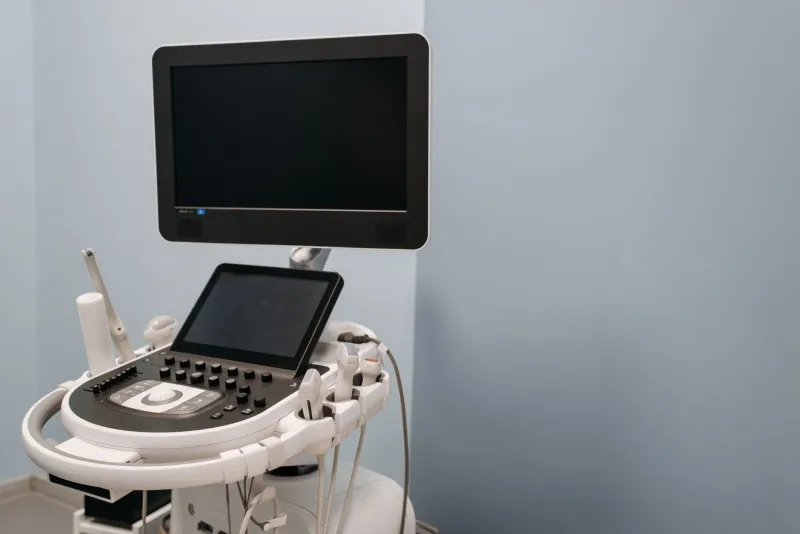
Standard consumer cameras operate at 24 to 60 frames per second (fps). A hummingbird's wingbeat, cycling at approximately 80 Hz, is therefore rendered as an indistinct blur. A high-speed camera recording at 1,000 fps resolves each wing position with precision. Cameras used in research and industrial settings routinely reach 100,000 fps; specialized instruments designed for ballistic testing, plasma physics, or detonation analysis can exceed one million frames per second.
Achieving these rates demands a proportional increase in light. Because each frame's exposure time compresses by the same factor as the frame interval, a camera recording at 10,000 fps exposes each frame for roughly 100 microseconds. Capturing adequate photons in that interval requires either extraordinarily intense illumination—typically continuous LED arrays or pulsed strobes synchronized to the sensor—or sensors with exceptional quantum efficiency. Modern scientific CMOS sensors have advanced considerably on both fronts, reducing the illumination burden that once confined high-speed work to well-equipped laboratories.
What Classical Mechanics Looks Like at 10,000 Frames Per Second
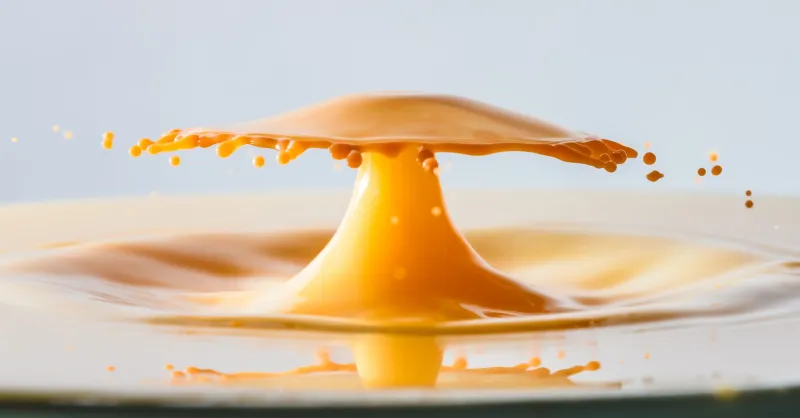
The value of high-speed imaging is not merely aesthetic; it is analytical. When a water droplet strikes a flat surface, it does so in a sequence of dynamically distinct phases that Newton's laws describe precisely but that human perception collapses into a single unremarkable splash. At sufficient frame rates, the droplet's initial contact, the formation of a thin lamella spreading radially outward, the emergence of a crown structure driven by surface tension and inertia, and the eventual Rayleigh-Plateau instability that fragments the crown into secondary droplets all become individually resolvable events.
Each phase is governed by well-defined physics. The spreading lamella obeys momentum conservation; its radial velocity is predictable from the droplet's impact velocity and the ratio of inertial to viscous forces captured by the Reynolds number. The crown's rim, subject to surface tension, fragments when perturbations exceed a critical wavelength—a prediction that Rayleigh derived analytically in the nineteenth century but that experimenters could not verify frame by frame until high-speed cameras became available.
The same principle applies to solid mechanics. During a professional boxer's punch, the fist and target deform over intervals of approximately one to five milliseconds. To the unaided eye, the impact is instantaneous. At 10,000 fps, the sequential compression of tissue, the propagation of a stress wave through the struck surface, and the elastic rebound of both objects become measurable. Biomechanical researchers at institutions including the University of Michigan and Stanford's Human Performance Laboratory have used precisely this approach to quantify peak accelerations, contact durations, and force distributions in ways that static force plates cannot fully resolve.
Material Behavior Under Transient Loading
One of the most scientifically productive applications of high-speed imaging involves the characterization of materials under rapid loading—conditions relevant to automotive safety engineering, aerospace structural design, and ballistic protection research. When a material is stressed faster than its internal relaxation mechanisms can respond, it may behave in a manner qualitatively different from its response to quasi-static loading. Steel that deforms plastically under slow compression may fracture brittlely under impact; polymers that appear elastic under ordinary use may exhibit viscoelastic lag under shock loading.
High-speed cameras, synchronized with Hopkinson bar apparatus—devices that transmit precisely calibrated stress pulses through a specimen—allow researchers to directly observe crack initiation, propagation velocity, and fracture mode as functions of strain rate. The resulting data inform constitutive models used in finite element simulations, closing the loop between empirical observation and predictive engineering.
Similar techniques are employed in the automotive industry, where crash-test laboratories use high-speed cameras operating at several thousand fps to track the deformation sequences of structural members during regulated impact tests. Federal Motor Vehicle Safety Standards require these tests; the imaging data are essential for validating the computational models that guide vehicle design before physical prototypes are ever built.
Fluid Dynamics Made Visible
Fluid mechanics presents particular challenges to conventional observation because flow fields are often invisible, three-dimensional, and transient. Techniques such as particle image velocimetry (PIV) address this by seeding a flow with tracer particles, illuminating a plane with a laser sheet, and recording two consecutive frames with a high-speed camera. Cross-correlating the particle positions between frames yields a velocity field—a quantitative map of how the fluid is moving at every resolved point.
At high frame rates, PIV resolves turbulent fluctuations that lower-speed systems alias or miss entirely. The energy cascade in turbulence—in which kinetic energy transfers from large eddies to progressively smaller ones until viscous dissipation converts it to heat—unfolds across a wide range of timescales, and capturing the full cascade demands temporal resolution commensurate with the smallest, fastest eddies. High-speed PIV systems operating at several kilohertz are now standard in aerodynamics research facilities, including wind tunnels operated by NASA and the Air Force Research Laboratory.
The Instrument as Epistemological Tool
Beyond specific applications, high-speed imaging embodies a broader epistemological principle central to experimental physics: the instrument does not merely record reality but actively extends the domain of phenomena accessible to scientific scrutiny. Every improvement in temporal resolution has historically yielded discoveries—not because new physics was introduced, but because existing physics, previously hidden by observational limitation, became legible.
Eadweard Muybridge's 1878 photographs of a galloping horse, captured at millisecond intervals with multiple cameras, resolved a genuine empirical controversy about whether all four hooves leave the ground simultaneously during a gallop. They do. The answer was always there, encoded in the mechanics of locomotion; the instrument made it visible. Contemporary high-speed cameras operating at a million frames per second continue that tradition, revealing in granular detail the mechanics that classical physics has long described in equations but that only now can be observed directly.
For students and researchers, this history carries a practical lesson: the limits of perception are not the limits of physical reality. The gap between what we see and what is happening is vast, and it is populated entirely by physics.